
Return to Dublab: Damage Control with Founding DJ Derelict
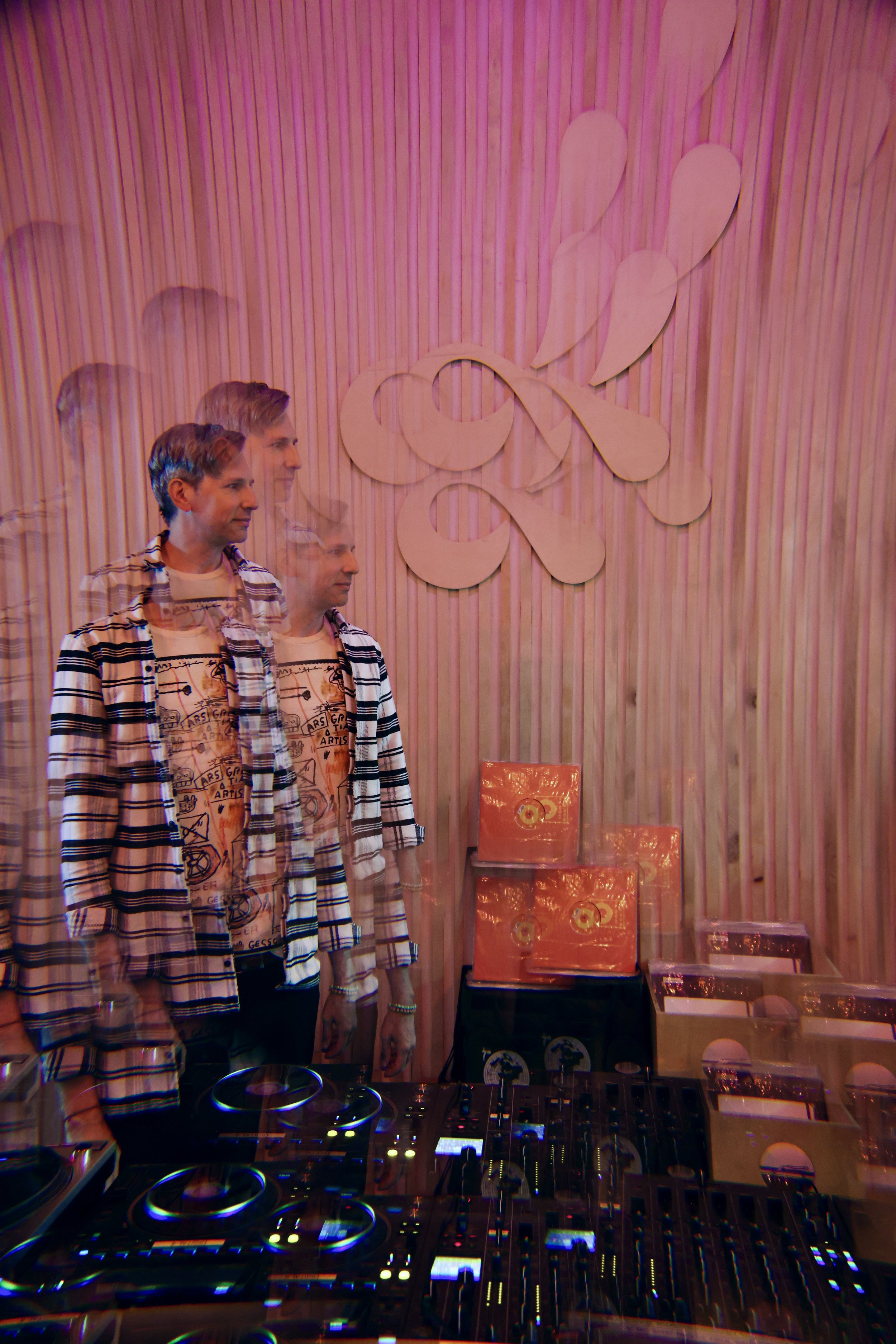
Thank you Dublab & Derek “Derelict” McNeill for having me back on Damage Control! After premiering my retrospective collection, Aura, we had a deep chat about early influences, falling in love with sound, the NYC music scene of yesteryear, and nearly getting sued by your heroes. We got a little goofy too.
Check Out the Interview on YouTube:
Full episode archive is available on Dublab.com. Photos by Alex Mastoon.
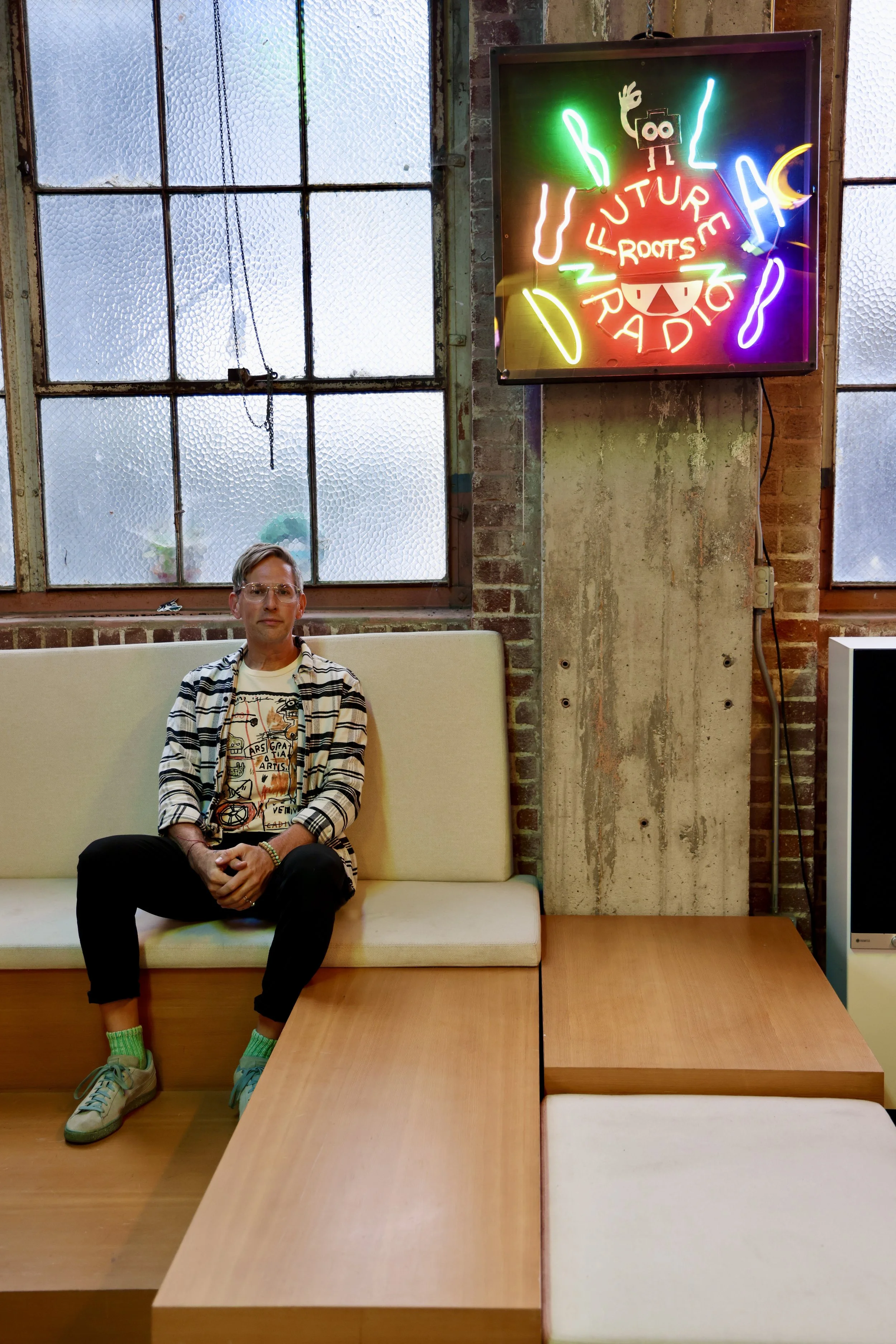
At Dublab HQ
Transcript below:
Caural: Can you hear me broadcasting?
Derek: Caural, thank you so much for dropping that amazing mix!
Caural: Hey, thank you. That was actually the world premiere of Aura, which is a collection of my material from ’99 to 2003. Some of it was released - a lot of it was not - but I really wanted to make a collection to introduce people who maybe haven't heard my music before to where I've come from, and then - also later this year - [I’m] doing some new music. So kind of looking back to look forward, if you will.
Derek: Yeah. In that respect for the music that you put inside that mix - that is the Aura album as you said - you've released music on a variety of labels and I know you've worn a number of hats in different genres as well.
Caural: My favorite's the cowboy hat.
Derek: What were some of the early genres that really stuck out to you and that really informed your production from that ’99 to 2003 era?
Caural: Well, I'd say that, first of all, I had been playing music my whole life in live settings, so playing in bands. Playing with my neighbor Stuart Bogie, we had set up a Fisher Price tape recorder and recorded Casio keyboards and stuff like that, and playing in rock bands, playing in live Hip Hop… And I think that I really wanted to make electronic music because as a producer-minded individual, I wanted to be able to sculpt each moment and do things that aren't possible live, first of all, but then also kind of capture the spirit of Hip Hop, which I had grown up listening to; electronic music, which was so exciting, especially in the early 90s.
I was listening to B96 and Z95 in Chicago, a lot of house and techno. And so you had all these sorts of genres that were brand new because the software and the electronics started to exist in that era. And so I think that, having grown up in the 80s at the nascence of all of these sorts of like synthesizers and drum machines and then sampling, I was like, I want to be able to sample! I want to be able to take the things that I grew up listening to, give them a new life, and recontextualize them like I could never do just playing a guitar. I mean, you could play a chord, but you can't have that specific chord that is on that record with that dust and that sort of room and those mics and, it became an exercise, really, in taking environments to put together. And so I think that as far as genre is concerned, it was really sound that I was most interested in using as instrument. And to this day, I really look at music as a visual art form. Not just… It's a multisensory thing, but it was always predominantly visual to me. And so I try to look at music as painting or as sculpture - as film, even.
Derek: Amazing. And from that production-side of things, having come out of tape recorders and playing with your friends and what was kind of your production process in that era, or did you bounce around and just try different things? Or did you have, like, this is my MPC or my… I have to use this toy piano, you know?
Caural: Well, I mean, honestly, I had friends who had MPCs, and I was working at the time. I was kind of in between school when I actually got a Yamaha SU700, which was my drum machine / sampler of choice. And it differed from an MPC in that all of the controls were visible: you could turn a knob and immediately change a sound, whereas an MPC, you have to scroll through functions, and it's a lot less performance friendly. And so I kind of got into this machine that was made, I think, for techno or for really loopy music, but there's workarounds within it where you can restart loops and there's mutes, and so you can kind of make your own thing out of it where it doesn't need to just be looping. So perhaps I used it in a different way than it was intended.
Derek: Yeah. And that was part of, I think, that era, the “breaking things to make new sounds”. Like Sun Ra says, you make a mistake and you do something wrong, you make another mistake and you do something right.
Caural: Yeah, exactly. And I think that really, it's not even - and I totally hear what you're saying - I don't even know if there were mistakes in that time as much as just trying things any way that we could to make things sound the way that we wanted. Because I would have things in my mind. I’d say, I'm gonna take this drum sound - or I'm gonna take this little loop and I'm gonna put things on it - and it wouldn't work at all! And then I would strip everything away except for one little sound that was sort of incidental, and then a new song would completely come out of that.
So I think that, like, in the spirit of experimental music and just a performative experience of a lot of the music existing just for me when I was making it… Because a lot of it, it was almost like performance art. You'd just - you'd be in the room and you'd be listening through these looping, looping samples, and that was almost part of the music as well: the songwriting aspect of it became part of the performance. And so I think that I kind of came out of working on Hip Hop specifically and had gotten almost - I don't want to say bored because it's negative - but, like, I wondered if you took the framework and the spirit of sampled sound that's within that sort of tempo and that sort of feel with deep drums, dusty samples, whatever, but then made a composition of it outside/instead of a backing for an emcee, what would that look like? What if it was more compositional instead of an accompaniment to an emcee?
Derek: Yeah. And I know in that era of Hip Hop, that was a kind of a… It wasn't novel. I mean, there [were] producers that were always really amazing and did amazing production. But, yeah, there was a lot of “this is kind of beholden to an emcee”. And once you're able to free - well, not free yourself I mean, the emcee is obviously [a] very important part of Hip Hop culture - but to look at things outside of that, were there discoveries that you were making with respect to how your production could take different directions and evolve into new terrain once you're able to think of things outside of, like, “okay, well, this is where the verse would typically drop”
Caural: Yeah…
Derek: And, like, “now where do I go? There’s no verse!”
Caural: Right!
Derek: Right?
Caural: I think that it's funny too. Like, the way that I started looking at electronic music was that I wanted to do something that I had never really done before but, not emulate anyone but say, let me use these sorts of ideas as starting points, but then let's see where it goes. And I know that in even my best moments where I was trying to make a rap song or trying to make an electronic, like… Like I tried to make a House song once, and I failed miserably. And I realized that, oh, I'm not doing styles as much as I am seeing what I like and what fits together in the way that I've put it together, even if it's an accident. And it’s like - going back to what we were saying about mistakes - I feel that sometimes the mistakes that I made actually led me to the greatest discoveries in terms of even just like how to use the sampler or, having a CD skip when I was sampling it and then being like, oh wow, like I actually love the sound of that! I can do something rhythmic.
You know, someone like Oval, for instance, really influenced me - his album Systemisch that came out in like ’96, I think. You know, hearing… I mean, I should step back and just say that it was so exciting to have sampling highlight even the mediums themselves, like the compact disc, the record, the cassette… Those sorts of opportunities opened up sounds and glitch and whole genres that didn't exist prior to those mediums existing, and so it was all very new. But I'd say that listening to drum and bass - listening to the sort of beginnings of instrumental Hip Hop/where it started to go with DJ Shadow or Mo Wax or even a label like Asphodel which I interned at coincidentally - it was all the next step from Hip Hop/sampled music/you know, Musique Concrete back with tapes. It was kind of like, we had the software, we had the spirit and where can it go from there?
Derek: Yeah, and I think in that regard too, I know that your production’s informed by Musique Concrete and some of these other music schools of thought that you have these foundations in. But a lot of that was like, well, we need a production studio with full fledged “here's our reel to reels”. And then everything started to get cheaper and more accessible that - in that era, to be able to adopt the same kind of sounds or have access to them, but to be able to do it yourself - was there anything in particular that was like that brainstorm moment in your head when you were like, wow, I am sounding like Steve Reich? Or like “I can do it”, right? Like, where was that moment for you in learning how to produce where you're like, wow, I really am able to do all of this myself with the current tech and everything?
Caural: I mean, honestly, it came really quickly because I bought a sampler in spring of 1999 and I came up with a name for myself - my mom actually came up with the name Caural. And I think that as soon as you name something, you kind of bring it into existence - the whole spelling aspect of it, right? And I had made four songs on the sampler in a matter of months, and that experience went fairly quickly and it really… My entire first record that I did, which was for a label called Toshoklabs, was entirely samples from my own collection of music.
Derek: Good thing you didn't have a copyright infringement issue.
Caural: You know, I will get to that soon because I've been called out once and it was an unfortunate situation, but -
Derek: I don’t want to get you in legal trouble.
Caural: No, no - he knows. I spoke at Princeton for Paul Lansky's composition class - and I didn't know it was his class, and he didn't know who I was, and he was not there… And he looked me up and the first song was actually what you played, “I Won't Race You”! That song is made from samples of one of his early synth works where he did kind of sampled vocals. And I just took big samples, but made a whole new chord progression out of them, put drums on it, etcetera. You know, in the spirit of Hip Hop, right?
Derek: Yeah that’s… Back then, it was, you know -
Caural: It’s what you do! -
Derek: - not about that, yeah.
Caural: It’s what you do - I mean, it's okay! But he found that song and he was like, “hmm, that's me.” And he hit up his student who invited me to speak and said, “did Zak mention sampling me?” And the student was like, “uh, no”. And I think that he was more butt-hurt about me not having given him his props than me even using his music. And he's like, maybe I should sue him!
Derek: Yeah - yay!
Caural: Yay! But he didn’t. He didn't sue me. And to be honest, I gave Mush (the label that I was on at the time) all the samples that I used, and I was like, “hey, these could be a problem”.
Derek: Yeah, they did their due diligence, I'm sure.
Caural: They did, they did… I’m sure they did! Robert, if you're listening… No, I'm just kidding.
Derek: Yeah…
Caural: But uh - oh gosh, where were we?
Derek: We're talking about the early kind of discovery production and then getting into, I guess maybe on the sampling side, sampling your own music too?
Caural: Yes thank you. So it went by fairly fast, and I think the first four songs that I put together, one was sort of - I mean, definitely not Hip Hop - but in, you know, 120bpm, kind of like a banging beat, one was a straight up noise track, one was more Drum and Bass, and then there was kind of like an Electro song. And I sent that CD to a man named Peter Becker, who was my mentor of sorts at Asphodel, which I interned at in ’97, and he emailed me and he's like, “hey, this is good.” And I was like, “thanks”. He goes, “No, no, no, I think that I can get you on a compilation or something.” And I was like, “okay”. And he gave it to Nate Harrison who ran Toshoklabs. And so within buying a sampler and getting a record deal was probably like five months?
Derek: And then after that, was it more like that you would continue to send demos out to some interested labels or were people coming to you? I know that, also in the scene back then, it's not like a big pond, so I'm sure word got out about you and vice versa (that you knew about a bunch of different labels). But how did that kind of progress for you in that era to get to different labels and, stylistically, were there any things that you were like, this label was really up my alley for this project.
Caural: Yeah, I mean, to be honest, I have to say it was truly a magical time because word spread in a much different way than it does now. And Toshoklabs at the time was this buzzed-about label in New York on the IDM list, so I had started working with them and I did my first show at Brownies, which was a club in the East Village. The person who ran the show was Todd at Carpark Records.
Derek: Yes - shout out to Todd [Hyman], he was an early supporter of Dublab.
Caural: Oh great!
Derek: We had all the CD-Rs and such in the studio.
Caural: Nice! Oh, he did fantastic things. And there was a record store called Safety and Numbers and there was Other Music. And New York City was a really exciting place to be in the late 90s / early 2000s. But I moved back to Chicago after school (after NYU) and I was working with this rapper named Diverse, who has since changed his name to Ken Cardo, I believe. We made this record with him which thankfully never came out cause frankly it was really corny. He was great, but we were not. It was sort of like poor man's Roots. But anyway, a demo was slipped of his music to Seven at Chocolate Industries and Seven was like, you're great - they're not. It's like, let me get you some other producers to work with, and one of them turned out to be me. He heard my music and he's like, I like you, I like your music, and so it happened in that easy of a way. And then with Mush, I don't remember if I reached out to Mush? Plug Research, you know, I did a remix for your brother and Alfred on Plug Research… And actually I did reach out to P-Vine in Japan about Remembering Today, but labels really kind of came to me. I was doing a lot of remixes at the time and it was really just a fertile ground for.. And it wasn't big, you know, it wasn’t… It never hit the level that it is at now. And I know last time that I was talking to you, we talked about Flying Lotus, we talked about Ras G and all these people who… At the time, you know, you're going to Sketchbook at the Little Temple and you bring your demo and your CDR and it's just like, cool. And it was just like all dudes, no one cared. And then all of a sudden it's like - you know, wow. So…
Derek: Yeah, for me too. When thinking about that, the first time I met you - speaking of Sketchbook - was when you were involved in DJing at the Up Our Sleeve in New York, and you mentioned on the production side too, some of the things that you were doing for live performances. But there was that element in that beat scene where it was like, it came up with the Hip Hop roots and obviously with the cross-pollenization of the electronic scene, but where you had to kind of like be good at a lot of different things. Like you had to be a good DJ. Not everyone was a DJ, but you know, our mutual friend Sweatson Klank is like, “let me slap the bass”! It seemed like it was such a small scene, but there's a lot of people who had already built upon their life experiences and their skills to be able to get there -
Caural: Yeah.
Derek: So going into it was obviously a little bit of a trial by fire. But when you were meeting with these people in that era around the first time, was there anyone [about whom] you were like, “I found my people!” Or, how was that kind of communication with some of these other artists in that era?
Caural: I think that, really, if you were making music, you are my people. If you're making art, you are my people. And especially the labels that I worked with. I’m so grateful to have been on Chocolate Industries and Toshoklabs and Mush… Ninja Tune released some of the music that you just listened to. There were a couple songs that were on Urban Renewal Program. And Ninja Tune was an absolute dream label of mine! I was licensed by them; I was never recording for them directly. But all of these people had the same sort of philosophy about music, which is that anything goes, and this sort of non-genre but “all-genre” (kind of the Leaving Records mantra, if you will) of really just finding people who like everything! And I think that a lot of the music that I made - and make - you listen to it and it is from everything. I listen to rock, I listen to jazz, I listen to noise, experimental pop music, and I studied Gamelan. So, I mean I love all sound, and I think that like anyone who is making electronic music - especially sampled music - also had that sort of library in their mind of all things that could be used/enjoyed cause it's all music; it's all exciting.
Derek: Yeah. So obviously this is a bookend of a certain era in time, in your life, and your production and there's the revisiting it, the nostalgia of it, and looking into the present day. There's that hunger for that era. But, not to be a “surprise person”, but if you want to tell people about what's coming down the radar for you and give them a little sneak peek into the future, that would be amazing!
Caural: Yes, absolutely. So Aura, which you just listened to, releases May 31st. Later this year, I plan on releasing some brand new music - the art is done and the music is not, believe it or not! - but I have a project that is in the works which is going to be sort of an EP/mini LP, and then I will be working on a full album probably for 2027.
Derek: All right.
Caural: And to be honest, the last bunch of years have just been insane - I think for the world? - but, in my own life, I've been kind of taken away from sound and have been writing a feature script with my wife Alex, and that has really been my primary focus. And so that's why music has slowed for me in the last couple years.
Derek: But it's all art!
Caural: It is all art!
Derek: Yeah.
Caural: So, yeah, Aura, May 31. There'll be an EP later this year or at least a couple songs from it, hopefully a new record next year. My wife and I also released something under the name Primary Chorus. We did a song together and we'll be doing some new music together as well. And I have some collaborations that have been recorded and then are in talks. I don't want to mention any names now, but there will be some more to come. And even on a collaboration tip on Aura, the last song was Alfred (Daedelus) did a remix of a song of mine called “Krylon Psychology”. That song was done at NYU and the idea was using graffiti as musical score. He was an old labelmate of mine - we also toured together as Adventure Time - and that's actually how I met Mark and Dublab. But yeah, so it was good to incorporate his vision and the spirit that we shared on this project because he still is a kindred spirit.
Derek: I think it's a testament to that era and that you're able to continue to collaborate and work with people from that era. That there are so many strong foundations of different genres and like-minded people that going back and putting together a comp of that probably makes you realize how many people from that era are still in your life and how much of an influence and I guess a blessing it is to be able to have worked in that time frame and do the music.
Caural: Yeah, I mean it's really a sobering thing to think that it was almost 30 years ago now. Some of that music, like “World Negative One” which I released as a single - that was done in 1999 as was all of my first music. And so it really is kind of a way to feel that nostalgia, to share that music with a new audience… Yeah, it is timeless- not my own music, but music in general. It was a special time.
Derek: Yeah, it definitely was. I appreciate you coming on and you're always welcome back. I think we'll need to have you back when you have your new material ready to be premiered. So we had a premiere today! Thank you so much. Everyone listening, check out Caural's compilation Aura, coming out May 31st on Bandcamp. It's amazing. And we will be continuing with music. Jen Zellmer's “Thread the Needle” show will be on right now, so going to have to do a hard cut over, but thank you so much for coming.
Caural: Thank you, Derek.
Derek: All right everyone, you're listening to Dublab. Give us two seconds and I'm going to switch to Jen.
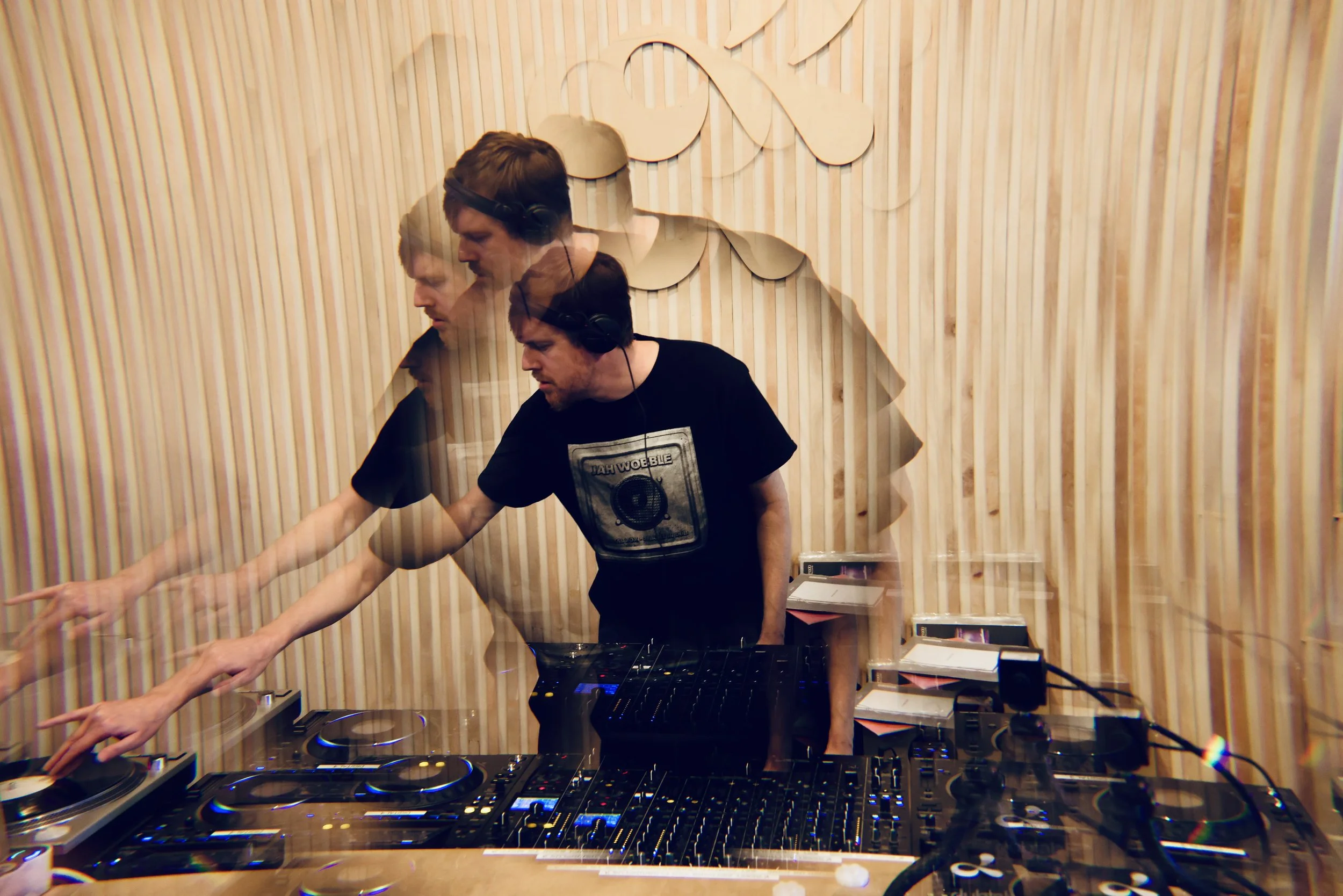
Derek spinning the hits